

 TR
 DE
 IT
 NL
 FR
 RU
 AZ
Technical · · 8 min read
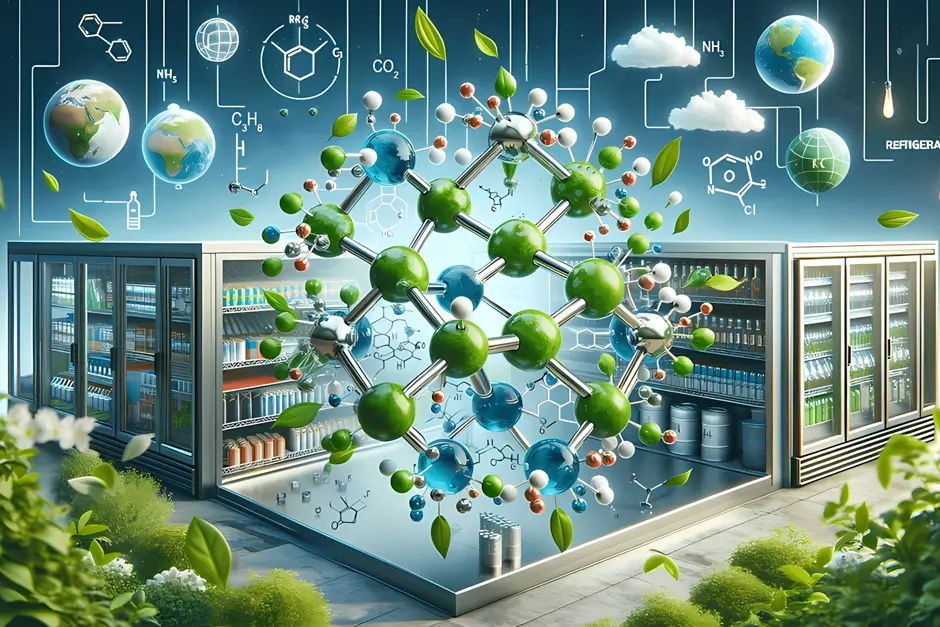
The environmental impact of refrigerants is becoming an increasingly critical issue due to their role in ozone depletion and global warming. In this article, we explain the concepts of ODP and GWP, the evolution of refrigerants from CFCs to low-GWP next-generation solutions, and global regulations such as the Montreal Protocol and the Kigali Amendment.
Summary: The environmental impact of refrigerants is becoming an increasingly critical issue due to their role in ozone depletion and global warming. In this article, we explain the concepts of ODP and GWP, the evolution of refrigerants from CFCs to low-GWP next-generation solutions, and global regulations such as the Montreal Protocol and the Kigali Amendment.
What Are Refrigerants and Why Do They Matter?
At the heart of every cooling and air conditioning system are refrigerants — chemical compounds that absorb heat from one space and release it into another. Choosing a refrigerant, however, is not merely a technical performance question; it is also a critical environmental decision with a direct impact on the atmosphere, the ozone layer, and global warming.
For decades, the industry has undergone a transformation that started with ozone-depleting chlorofluorocarbons (CFCs) and moved on to hydrofluorocarbons (HFCs), which are less harmful to the ozone layer but still carry a high global warming potential. Today, the focus has shifted to a new generation of "eco-friendly" refrigerants that are both ozone-safe and low in global warming potential.
ODP and GWP: What Makes a Refrigerant "Eco-Friendly"?
The environmental impact of a refrigerant is measured using two key indicators: Ozone Depletion Potential (ODP) and Global Warming Potential (GWP).
ODP (Ozone Depletion Potential): Measures the damage a refrigerant causes to the atmospheric ozone layer relative to the reference substance R11 (CFC-11), which has an ODP of 1. Most modern refrigerants have an ODP of 0.
GWP (Global Warming Potential): Expresses the warming effect of one kilogram of refrigerant released into the atmosphere over a 100-year period, compared to the same amount of carbon dioxide (CO₂, GWP=1). The higher the GWP, the greater the refrigerant's greenhouse gas effect.
The Four Generations of Refrigerants
The history of cooling technology is a continuous process of improvement in refrigerant selection:
- ❄ Generation 1 – CFCs (R11, R12): Chlorofluorocarbons that severely damage the ozone layer. Globally banned under the 1987 Montreal Protocol.
- ❄ Generation 2 – HCFCs (R22): Less harmful than CFCs but still ozone-depleting. Production and import have ended in most countries, with limited service use still permitted on existing systems.
- ❄ Generation 3 – HFCs (R134a, R410A, R404A): Do not harm the ozone layer (ODP=0) but contribute significantly to global warming due to high GWP values. Being phased down under the Kigali Amendment.
- ❄ Generation 4 – Low-GWP and Natural Refrigerants (R32, R290, R744, HFOs): New-generation solutions that are both ozone-safe and low in global warming potential. Increasingly becoming the industry standard.
Global and Local Regulations
Signed in 1987, the Montreal Protocol was one of the first and most effective environmental agreements to achieve a global reduction in ozone-depleting substances. Under the protocol, CFCs were eliminated entirely and HCFCs were largely phased out.
Adopted in 2016, the Kigali Amendment expanded the scope of the Montreal Protocol to also phase down high-GWP HFCs. The European Union's F-Gas Regulation ties this goal to an even stricter timeline, progressively restricting the use of high-GWP refrigerants in new equipment. As Türkiye aligns with EU legislation, the local industry is undergoing a parallel transformation.
Comparing Common Refrigerants
| Refrigerant | Type | ODP | GWP | Status |
|---|---|---|---|---|
| R22 | HCFC | 0.05 | 1,810 | Being phased out |
| R134a | HFC | 0 | 1,430 | Being phased down |
| R410A | HFC Blend | 0 | 2,088 | Being phased down |
| R32 | HFC | 0 | 675 | Emerging new standard |
| R290 (Propane) | Natural (HC) | 0 | 3 | Next-gen – flammable (A3) |
| R744 (CO₂) | Natural | 0 | 1 | Next-generation |
| R1234yf | HFO | 0 | <1 | Next-generation |
Common Mistakes in Eco-Friendly Refrigerant Selection
- 1 Keeping old high-GWP systems "because they still work": Not replacing an existing R410A or R22 system may seem economical short-term, but rising refrigerant costs and supply restrictions increase total cost over the medium term.
- 2 Improper retrofit conversions: Converting a system to a different refrigerant without manufacturer approval can cause performance loss, safety risks, and loss of warranty.
- 3 Neglecting leak monitoring: Refrigerant leaks not only reduce system efficiency but also represent greenhouse gas emissions released directly into the atmosphere. Regular leak testing is becoming a legal requirement.
- 4 Skipping safety measures for flammable refrigerants: Low-GWP refrigerants such as R32 (A2L) and R290 (A3) are mildly to highly flammable; installation without proper ventilation, leak sensors, and trained personnel can be risky.
💡 Pro Tip: If you are planning a new cooling or air conditioning investment, choose your refrigerant based not only on today's regulations but on the regulatory roadmap for the next decade. Investing in a low-GWP unit now protects you from future supply restrictions and price increases on high-GWP refrigerants.
Coldora's Eco-Friendly Cooling Approach
At Coldora, we continuously update our rental cooling and air conditioning fleet with modern NMAC units, including EU versions that use the low-GWP refrigerant R454C. This allows our customers to stay compliant with current environmental regulations while keeping long-term operating costs predictable.
Low-GWP refrigerant · High energy efficiency · Rental and purchase options
Conclusion: The Right Choice for Sustainable Cooling
Refrigerant selection is no longer just an engineering decision — it is also a sustainability and long-term cost management strategy. As regulations tighten, businesses that move early to low-GWP, eco-friendly refrigerants both meet their environmental responsibilities and protect themselves from future supply and cost risks.